
Honorable Mention
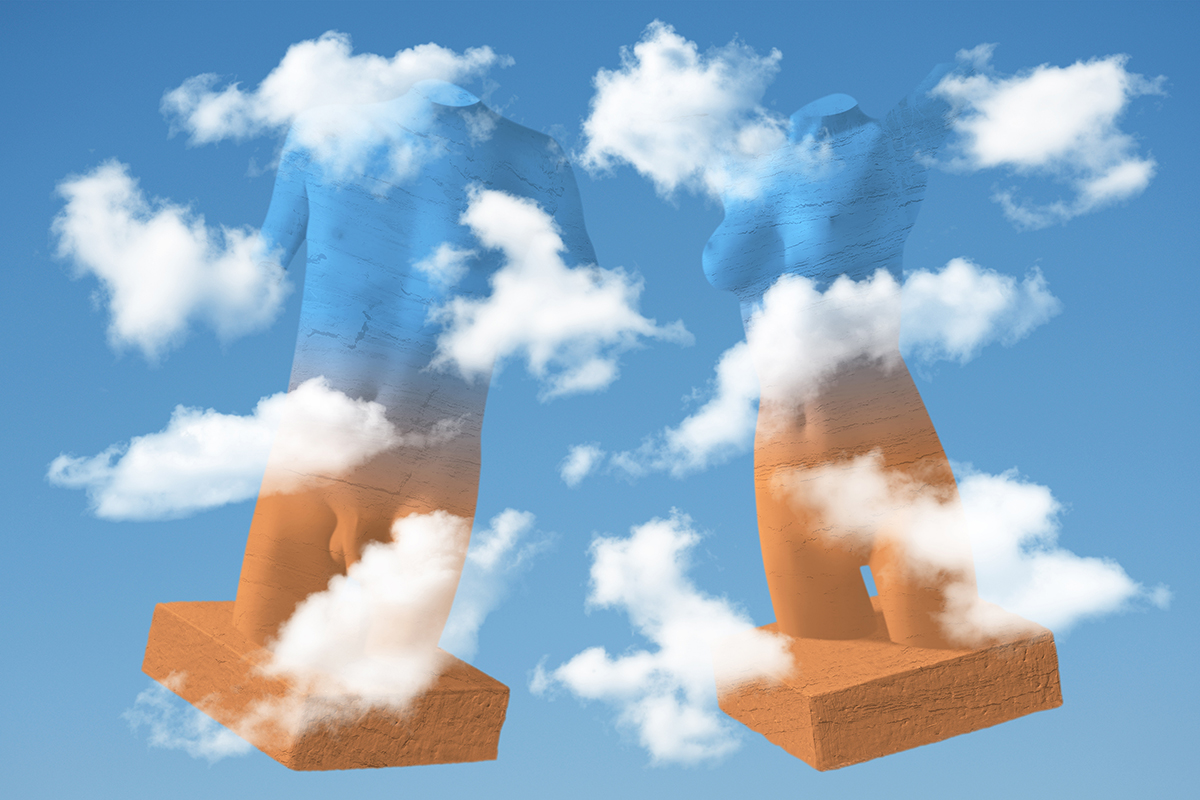
Surrealist Body
DESCRIPTION
My ongoing project focuses on an original representation of the human body, based on pop-art or surrealist paintings which are an infinite source of inspiration. To date, I'm mainly interested in the work of René Magritte, with a few references to Salvador Dali.The graphic composition is simple to reinforce the visual impact, challenge perception and engage the viewer’s mind. Several images have already won awards in various competitions.
The idea of transforming bodies into sculpted torsos opened up greater creative freedom. According to the photomontages, representing the subjects in different appearances helps to express a message.
AUTHOR
Self-taught, photography has been a passion since the age of 15, when I acquired my first camera, a Zenith E.In the early days, learning from a book on "creative photography" shaped my eye. Whatever the subject, my eye remains sensitive to original framing, graphic shapes, saturated colours and high contrasts.
For the ongoing photographic project, "Surrealist body", I've taken up a new photographic practice, making photomontages in Photoshop. These are made (without AI) from digitised personal slides.
This project is based on my attraction to surrealist painting, in particular the work of René Magritte. His two paintings “Torse nu dans les nuages” (1937) and “Magie noire” (1945) were the first source of inspiration.
Transforming human bodies into sculpted torsos and also, within the same image, depicting them in different ways offer greater freedom to develop imaginary.
The composition is minimal in favor of color, which takes sometimes center stage. Color alone can express a message, for example minimising the role of a character.
The cloud motif, so dear to René Magritte, is a major component. Depending on the image, the clouds become an enhancement to the body, a support for an element or a vector of dynamics.
As with surrealist painting, these photomontages satisfy my desire to transform reality into the imaginary without the constraints of reason.
In the end, photography dialogues with painting and sculpture.
