
Honorable Mention
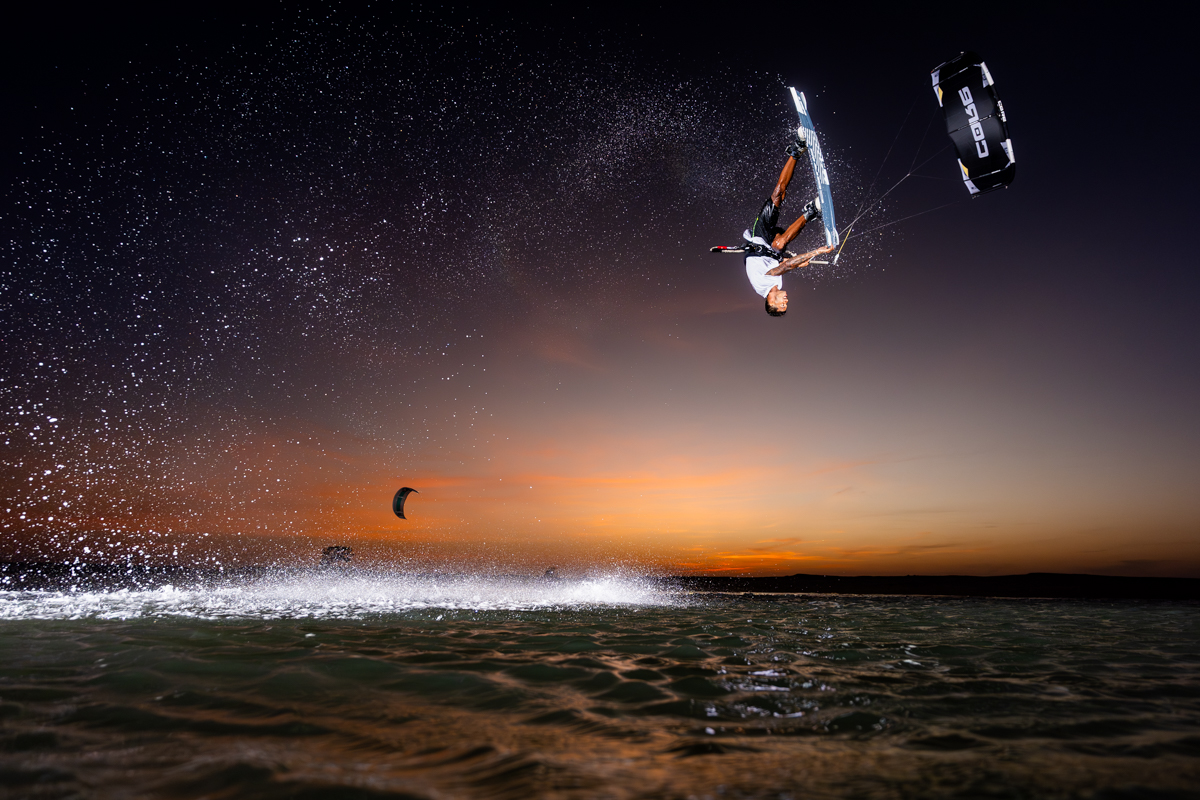
Framing the Wind
DESCRIPTION
Shooting kiteboarding is exhilarating—every session feels like a new adventure. One day you’re in a turquoise lagoon, the next you’re knee-deep in churning grey water with 60-knot gusts hitting your face. It’s a sport defined by unpredictability and variety, which makes it both a challenge and a gift for any photographer.What makes kiteboarding so unique is its diversity. Each discipline—freestyle, big air, wave riding, park, and foil—has its own energy and visual language. Freestyle is raw and explosive, big air is monumental, and wave riding is fluid and cinematic. As a photographer, you’re not just capturing action; you’re translating emotion, style, and environment into a single frame.
My background in skateboarding photography shaped the way I approach kiteboarding. In skate culture, there’s a strong partnership between rider and photographer—you find the spot, plan the trick, and chase the perfect moment together. That collaboration carries over to kiteboarding, but with one key difference: the wind gives us freedom. We can move the action for a better background or line it up perfectly with the light.
Skate photography also taught me the power of artificial light. Using flashes is second nature on land, so I brought that to the water—setting up floating platforms and using powerful battery-powered strobes to sculpt the scene. In full daylight, strobes might seem counterintuitive, but when balanced right, they transform the image. The spray turns to a glowing halo, the kite bursts from the sky, and the rider becomes a silhouette carved from light.
In Brazil’s northeast, the wind is world-class but the equatorial sun is unforgiving. Strobes give me control—turning harsh midday light into golden-hour magic, anytime I need it.
AUTHOR
My interest in photography began during a time I was also really into mountain biking. So I was mainly shooting the landscape of the places I got to go on my bike. Since biking is a sport that teaches you the importance of waking up early, I’ve also learnt to appreciate the beauty of that early morning light.Since I’ve always been into sports it was a natural step to start shooting my friends doing sports. I quickly noticed that shooting during “the golden hour” led to shots I liked more. But then I started shooting sports like skateboarding and it’s very hard to talk skateboarders into walking up at 5am to get that good light. That was when I started studying artificial light.
Nowadays I travel with a pretty big amount of gear and place flashes where I probably shouldn’t be placing to get the shots you see here.
